By Jai Krishan·Talk & Text Hub
Last updated October 15, 2026
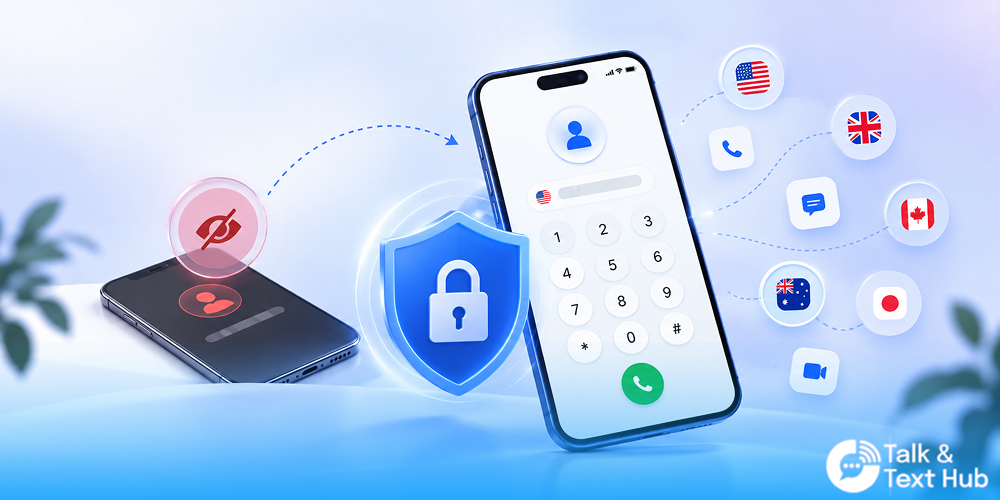
Protect Your Personal Phone Number: 7 Situations Where a Virtual Number Helps
In modern times your phone number has become much more than just a way to reach you. It's a login credential, a lookup key for data brokers, and the one identifier that follows you through all your life processes. Every time you type it into a form, a listing or a chat, a copy lands in a database you'll never see. So the smartest habit you can build is simple: don't give out your real number when you don't have to.
The challenge however is knowing the apt time to share or withhold the information, that gives someone access to your time. Below are seven everyday situations where it pays to protect personal phone number details, and how a second line keeps you reachable without the risk. Read on, because a few of these will probably be on your calendar this week.
Why Your Real Number Is Riskier Than It Looks
Most people treat their number as harmless, but it carries more weight than an email address. It's tied to SMS-based two-factor authentication, account recovery flows and, in many cases, your identity records. Once it's in circulation, three things tend to follow:
Data broker aggregation: Numbers get matched to names, addresses and purchase histories, then resold
Spam and phishing: Smishing and vishing campaigns target numbers pulled from leaked or scraped lists
Account takeover attempts: Attackers who know your number can try SIM swap fraud or trigger password resets
That's why many people now choose to hide your real phone number by default and share a separate line instead. A virtual phone number gives you exactly that: a working, dialable number that isn't tied to your SIM or your identity.
7 Situations Where a Virtual Number Earns Its Keep
1. Selling on Online Marketplaces
Classified ads and resale platforms invite strangers to contact you, often by phone. A marketplace listing is the easiest way to leak a personal number to hundreds of people. Using a separate line lets you hide your real phone number from buyers, and the occasional scammer, and moreover you can drop the line when the listing is done.
2. Dating Apps and First Meetings
Moving from an in-app chat to a phone call is a natural step, but it hands over a number that's tied to your real name in countless databases. A second number for privacy lets you talk and text freely while keeping your personal life separate, and you can switch it off if a match turns out to be unwelcome.
3. Freelancing and Client Work
Invoices, contracts and email signatures get shared widely and stored indefinitely. A dedicated business line keeps client calls from interrupting your evenings, and makes your work number easy to change if you ever outgrow it.
4. Retail Sign-Ups, Loyalty Programs and Free Trials
"Enter your phone number for 10% off" is a trade where you get a discount, they get a marketing asset. Using a virtual number for these sign-ups keeps promotional texts and follow-up calls away from your main inbox.
5. Renting, Contractors and Local Services
Landlords, agents, plumbers and movers all ask for a number, and some of that data gets passed along to third parties. A second line gives you a clean record to point those contacts at, and a way to filter them out later.
6. Travel and Living Abroad
Roaming bills and SIM swaps are a hassle, and giving a foreign hotel or tour operator your real number adds risk. With a virtual line you can handle international calls without SIM, keeping one number across borders over Wi-Fi or mobile data.
7. Public Profiles, Flyers and Business Cards
Anything printed or posted publicly can be scraped, copied and kept forever. Putting a virtual number on a flyer, community noticeboard or website means that even if it spreads, your private number stays private.
How a Virtual Number Actually Protects You
Understanding the mechanism helps you judge the claims. A virtual phone number is provisioned to your account in the cloud and carried over VoIP, rather than being bound to a SIM card in your handset. In practice, that gives you:
Caller ID separation: Outgoing calls and texts show your virtual number, not your personal one
No SIM to hijack: The number isn't tied to a physical card, which removes the usual SIM swap route
Disposability: Numbers can be added, replaced or dropped without touching your main line
Call control: You can see call history and decide which contacts get which number
No tool makes you invisible, and a virtual line doesn't replace strong passwords or careful sharing. But it does shrink what an attacker, data broker or spammer can learn from a single contact form.
Choosing a Second Number for Privacy: A Quick Checklist
Not every provider handles privacy equally. Before picking a service, check these points:
Does it hide your personal number by default on outgoing calls and texts?
Can you manage several numbers from one app?
Does it support the destinations you call, including mobiles and landlines?
Are rates and plans clearly stated, with no vague "unlimited" promises?
Is the setup fast, so you can create a number when you need it?
Where Talk and Text Hub Fits In
This is the job Talk and Text Hub was designed for. It gives you a straightforward way to protect personal phone number details without giving up your reach:
A virtual phone number with no SIM card required, used over Wi-Fi or mobile data
Privacy-first design, so you can share a separate number for selling, freelancing or dating
Instant virtual number activation, typically within minutes
Multiple numbers in one app, with call history and usage tracking in one place
International calls without SIM swaps or roaming fees, to mobiles and landlines in the US, Canada and hundreds of other countries
Free app-to-app calls between users
Whether you're listing an item, meeting someone new or working across borders, Talk and Text Hub keeps your main number out of the conversation.
Share a Number, Not Your Identity
You don't need to be paranoid to protect personal phone number details. You just need a sensible default: give out a separate line whenever the other party doesn't truly need your real one. Done consistently, it cuts down spam, limits exposure to data brokers and removes an easy route for fraud.
If your real number is on more forms and listings than you'd like, it's time to change that. Download Talk and Text Hub, set up your second line, and keep your personal number personal.
About the author
Jai Krishan
Jai Krishan writes for Talk & Text Hub.
Related posts
Recent posts
- Guides & How-To ArticlesHow to Make Calls Abroad Without Swapping SIM: A Traveler’s Guide
- Guides & How-To ArticlesHow Talk and Text Hub Keeps Its Virtual Phone Number Services Secure
- Guides & How-To ArticlesWhat Is 2nd Line Calling? Your Guide to a Smarter Second Number
- Guides & How-To ArticlesInternational Calls Without SIM: Your Guide to Hassle-Free Global Calling
Start calling with your own number
Get a virtual number and keep your personal line private.
Get the appFAQs
Can a virtual number really hide your real phone number?
Yes, for the calls and texts you make through the app. Recipients see your virtual number rather than your personal one. It doesn't remove information you've already shared elsewhere, so use it from the start for new sign-ups and listings.
Is a second number for privacy the same as a burner phone?
Not quite. A burner is a separate physical phone and SIM. A virtual number runs through an app on your existing device, so there's no extra hardware and nothing to carry, and you can add or drop numbers as your needs change.
Can I use a virtual number for international calls without SIM changes?
Yes. Because the line runs over Wi-Fi or mobile data, you can call mobiles and landlines abroad without swapping SIMs or paying roaming fees. Talk and Text Hub supports calling in the US, Canada and many other countries, depending on your plan.