By Nachiketa·Talk & Text Hub
Last updated September 10, 2026
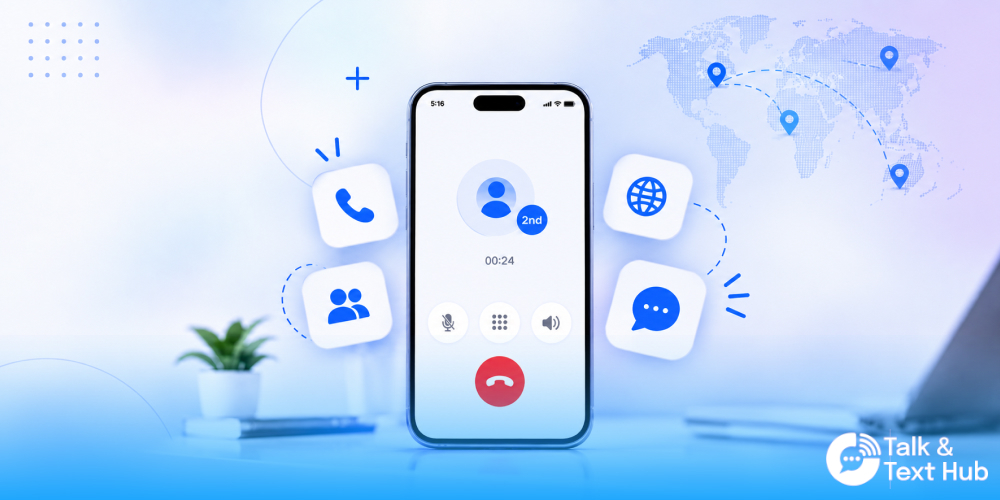
What Is 2nd Line Calling? Your Guide to a Smarter Second Number
Although stuff surplus to requirements is considered wasteful, there will be few people who haven’t wondered about the efficiency of maintaining two phones simultaneously, of course after subtracting the monetary and operational hazards that you’ll have to carry. However the entire idea behind 2nd line calling is a way to accentuate connectivity without the associating problems. It works to add another working number to the device already sitting in your pocket. No new SIM card, no second contract, no clunky extra handset. Just a fresh line layered neatly on top of the one you already use, ready for work calls, side hustles, online dating, or that group chat you'd rather keep separate from your personal contacts.
For anyone juggling multiple roles as freelancer, small business owner, frequent traveler, or simply someone who values privacy, understanding 2nd line technology isn't just useful, it's practically essential in 2026. Now particularly if your life stretches across borders, this concept becomes even more powerful once you connect it with international calls and international phone numbers. Stick around, because by the end of this, you'll see exactly why so many people are quietly retiring their second physical phones for good.
The Anatomy of a Second Line: What's Actually Happening Behind the Screen
At its core, 2nd line calling relies on VoIP (Voice over Internet Protocol) technology rather than traditional cellular infrastructure. Instead of routing your call through a physical SIM slot, the app assigns you a virtual number that lives in the cloud and communicates over Wi-Fi or mobile data. Think of it as renting a phone number the way you'd rent an apartment, you get full use of it without owning the underlying infrastructure.
This is precisely why 2nd line calling has become the go-to solution for people who want separation without duplication. Here's what's quietly working behind the scenes every time you make a call:
SIP trunking routes your voice data as digital packets instead of analog signals
Number provisioning instantly assigns you a working number, often within seconds of sign-up
Cloud-based call routing connects your line without needing dedicated hardware
Encrypted data channels keep your calls and texts private in transit
Why People Are Switching to a Second Number
The appeal isn't just technical convenience; it's lifestyle-driven. Here's what typically pushes someone toward adopting a second line:
Work-life boundaries - Freelancers and remote workers can give clients a dedicated business number without publishing their personal digits.
Privacy protection - Selling items online, dating, or signing up for services becomes safer when your real number stays hidden.
Dual SIM without dual hardware - Business owners who travel frequently no longer need to carry two devices.
Cost efficiency - Compared to a second carrier plan, app-based lines are typically a fraction of the price.
Instant disposability - Numbers used for short-term needs (rentals, marketplace listings, temporary projects) can be dropped without disrupting your main line
Where International Calls Enter the Picture
Or “Crossing Borders Without the Bill Shock: Where International Calls Enter the Picture”
Here's where things get genuinely interesting. A second line isn't just about domestic separation; instead it's a gateway to global connectivity. Because these lines operate over VoIP rather than a carrier-locked SIM, making international calls becomes dramatically more affordable and far less complicated than relying on your primary carrier's roaming rates.
Consider the everyday scenarios this unlocks:
Coordinating with a supplier overseas without watching the per-minute meter run
Checking in with family abroad on a whim, without pre-calculating call costs
Managing remote contractors across multiple time zones on one consistent line
Traditional carriers would have you staring at eye-watering per-minute charges for each of these. With a dedicated second line built for this exact purpose, international calling rates flatten out considerably, and many providers bundle generous international minutes directly into affordable plans.
The Passport in Your Pocket: Claiming International Phone Numbers
This is also where international phone numbers come into play. Rather than dialing out at premium rates, some second-line apps let you claim a local number in another country, say, a UK or Canadian number, so people there can reach you as if you were local, and you can call them without triggering long-distance fees on either end.
A local international number typically unlocks:
Local caller trust - recipients answer more readily when the number looks familiar rather than foreign
Two-way affordability - both inbound and outbound calls avoid international dialing surcharges
Regional presence without relocation - useful for entrepreneurs testing new markets
For digital nomads, import-export entrepreneurs, or families spread across continents, this single feature alone can justify the switch.
Decoding the DNA of a Great International Call App
Not all apps offering a second number are built equally. If international reach matters to you, here's what separates a genuinely capable international call app from a bare-bones dialer:
Wide country coverage for both calling and number provisioning
HD voice codecs that maintain call clarity even on inconsistent networks
Adaptive bandwidth handling so calls don't drop when Wi-Fi fluctuates
Local number options in multiple countries, not just your home region
Transparent, minute-based pricing with no hidden roaming-style surcharges
Real Lives, Real Lines: Second Numbers in Action
It helps to visualize this in practice:
The small business owner uses their second line as a dedicated customer service number, keeping it active during business hours and silent afterward something that is impossible with a single personal number
The student abroad keeps a local number active in their home country while using an international number locally, avoiding the awkward dance of SIM swaps at the airport
The remote consultant hosts client calls internationally without ever revealing a personal digit, projecting professionalism while protecting their boundaries
Where One App Ends the Second-Phone Era: Talk and Text Hub
This is exactly the space where Talk and Text Hub was designed to operate. Rather than forcing users to piece together separate apps for a second number, cheap international rates, and reliable call quality, Talk and Text Hub consolidates it all into a single, intuitive platform:
Instant second-line provisioning for personal or professional separation
Full international call app functionality, with access to international phone numbers across dozens of countries
Transparent pricing with no confusing tiers disguised as "unlimited" plans that quietly cap usage
No surprise roaming charges, even when calling across continents
Consistent call quality, engineered to hold up over long-distance connections
Whether you need a second line for privacy, a local presence in another country, or a dependable way to manage international relationships and business, Talk and Text Hub folds all of it into one coherent experience that is specifically built for people who refuse to let geography dictate how they connect.
Keep Your Call Lines Undisturbed With Talk and Text Hub
At its heart, 2nd line calling is about reclaiming control over your communication, deciding who gets your real number, when you're reachable, and how far your voice can travel without the conversation costing a fortune. Layer in the ability to manage international calls and claim international phone numbers, and what started as a simple privacy tool becomes a genuinely global communication strategy.
If you've been putting off getting a second number because it sounded complicated or expensive, this is your sign to stop waiting. Download Talk and Text Hub today, set up your second line in minutes, and experience what borderless, uncomplicated calling should actually feel like.
About the author
Nachiketa
Nachiketa writes for Talk & Text Hub.
Related posts
Recent posts
Start calling with your own number
Get a virtual number and keep your personal line private.
Get the appFAQs
Q: Is 2nd line calling the same as having a dual SIM phone?
Ans: Not quite. A dual SIM phone requires two physical or embedded SIM cards and is tied to your device's hardware. 2nd line calling, on the other hand, runs over VoIP through an app, so you get a fully functional second number without swapping SIMs, buying a second device, or being locked into a specific carrier.
Q: Can I use 2nd line calling to make international calls without roaming charges?
Ans: Yes, this is one of the biggest advantages. Since the second line operates over Wi-Fi or mobile data rather than traditional carrier networks, international calls are routed through VoIP infrastructure, which typically comes at a fraction of standard roaming rates. Apps like Talk and Text Hub bundle international minutes directly into their plans, so you avoid per-minute roaming fees altogether.
Q: Do I need a local SIM card to get an international phone number?
Ans: No. With an international call app like Talk and Text Hub, you can claim a virtual international phone number for a country you're not physically in, allowing you to receive calls locally and dial out without international dialing codes or long-distance charges, all without ever inserting a foreign SIM card.