By jai krishan·Talk & Text Hub
Last updated October 12, 2026
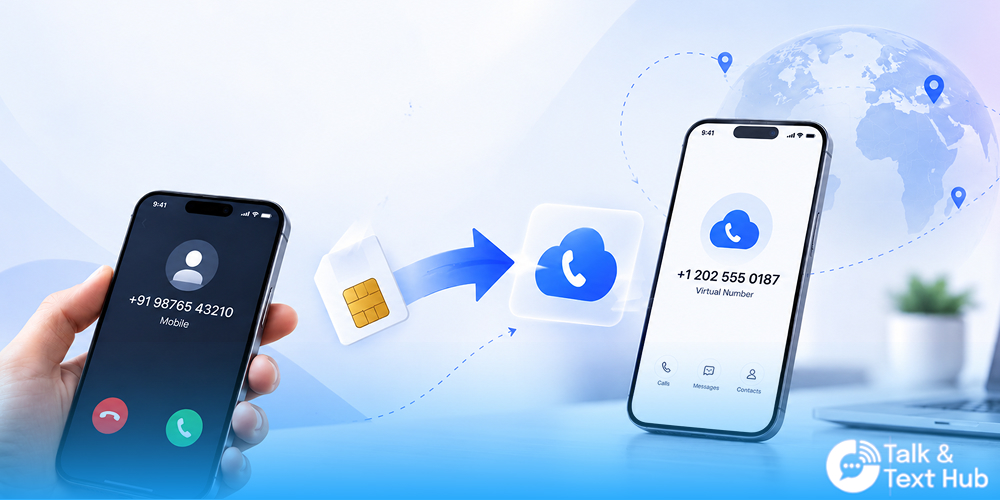
How to Transfer Phone Number to Virtual Number: The Complete Switch Guide
The process of changing how you communicate shouldn't mean losing the number identity everyone has already saved for you. This problem is solved instantaneously when you transfer a phone number to a virtual number as you keep the digits, but upgrade the technical algorithm running behind them. Whether you're tired of carrier contracts, want the flexibility of calling from any device, or simply need a smarter way to manage your calls and texts, the ability to transfer existing numbers onto a virtual platform has quietly become one of the most practical upgrades in modern telecom.
The process is often called "porting," and it's far less intimidating than most people assume. If you've ever hesitated to switch providers purely out of fear of losing your number, this is the guide that removes that fear entirely - stick with us, because the next few sections walk through exactly what happens, why it's worth doing, and how simple it really is.
Porting 101: What Does It Actually Mean to Port Phone Number?
At a technical level, when you port a phone number, you're invoking something called Local Number Portability (LNP) , a regulatory framework that legally separates your phone number from any single carrier. Your number was never truly "owned" by your old provider; it was simply hosted there. Porting formally transfers that hosting to a new network, in this case, a virtual one.
Here's what typically happens during the process:
1. Verification
The new provider confirms your identity and current account details
2. Authorization request
Your old carrier is notified and releases the number
3. Number routing update
Telecom databases update to reflect the new host
4. Activation
Your number goes live on the new virtual platform, usually within a short window
Why Make the Move? Reasons to Transfer Existing Number to a Virtual Line
People rarely switch systems for no reason. Here's what usually motivates someone to transfer existing number onto a virtual phone number setup:
1. Freedom from physical SIMs
Calls and texts run through an app instead of a locked hardware slot
2. Multi-device access
Answer the same number from a phone, tablet, or desktop
3. Lower recurring costs
Virtual plans typically undercut traditional carrier contracts
4. Built-in 2nd line calling
Add extra numbers without extra hardware, ideal for separating work and personal life
5. Global usability
Virtual number isn't geographically tethered the way a SIM-based number is
Each of these reasons points to the same underlying shift: your phone number becomes software-defined, not hardware-defined.
The Nuts and Bolts: How to Transfer Phone Number to Virtual Number
If you're wondering how to transfer phone number to virtual number without disruption, the process generally follows this sequence:
Choose your virtual provider and confirm your current number is eligible for porting
Gather account details that includes your account number, PIN, and billing information from your existing carrier
Submit a port-out request through the new provider's app or dashboard
Keep your old line active until the port completes most transfers finish in a few hours to a few days
Receive confirmation once your number is fully live on the virtual network
Because porting relies on standardized industry protocols, the underlying mechanics stay largely consistent across providers, even though the interface experience varies.
Virtual Phone Number vs Traditional SIM: What Actually Changes
Once you move number to virtual phone infrastructure, several practical differences emerge:
What Changes | Traditional SIM | Virtual Phone Number |
Call routing | Cellular tower dependent | Internet-based (VoIP) |
Device flexibility | Single device only | Multiple devices simultaneously |
Adding a second line | Requires new SIM/contract | Instant, app-based |
International reach | Roaming charges apply | Often bundled or discounted |
Number portability | Carrier-locked until ported | Fully cloud-hosted |
Busting the Biggest Myth: Does Porting Break Your Contract or Cost You a Fee?
This is usually the question that stops people mid-decision and accordingly, it deserves a straight answer. The act of porting itself, mandated under Local Number Portability regulations, does not carry a government-imposed fee, nor does it inherently void your rights as a customer. However, a few practical clauses are worth checking before you transfer existing number away from your current carrier:
Early termination fees - If you're still inside a fixed-term contract, your old carrier may charge an exit fee unrelated to the porting process itself
Bundled service dependencies - Numbers tied to family plans or bundled home/mobile packages may need separate untangling before porting
Provider-specific processing charges - Some carriers add a small administrative fee, though many virtual providers absorb this cost on your behalf
Loyalty perks and discounts - These are usually tied to the carrier, not the number, so they won't transfer with you
The reassuring part: none of these clauses can legally prevent you from porting your number. They may add a small cost or require advance planning, but your right to transfer phone number to virtual number ownership stays protected regardless of what your current contract says.
Crossing the Channel: Getting a Virtual Phone Number UK Without Losing Your Identity
For users based in or dealing frequently with the United Kingdom, porting takes on an extra dimension. A Virtual Phone Number UK allows you to retain a recognizably local number even if you travel, relocate, or run a business that needs a UK presence without a UK-based SIM. This matters for:
Client trust - UK customers are more likely to answer a familiar local prefix
Business continuity - Teams distributed across regions can share a single UK-facing number
Cost control - Inbound and outbound UK calls avoid international surcharges
Porting your existing UK number into a virtual setup preserves that local identity while freeing it from a single carrier or location.
Where Talk and Text Hub Fits Into Your Transfer
This is exactly the transition Talk and Text Hub was built to simplify. Rather than treating number portability as a technical hurdle, the platform streamlines the entire journey of moving your number onto a virtual system:
Guided porting support that walks you through eligibility checks and documentation
Zero downtime transfers, so your old line stays active until the new one is confirmed
Instant 2nd line calling once your number is ported, letting you separate personal and professional communication immediately
Access to a Virtual Phone Number UK and other regional numbers for anyone needing local presence abroad
Transparent porting timelines, with no vague "processing" windows left unexplained
Talk and Text Hub essentially removes the friction that keeps people tied to outdated carrier setups long after they've outgrown them.
Final Thoughts: Make the Switch Without Losing a Single Digit
Deciding to transfer a phone number to a virtual number doesn't mean starting over - it means keeping everything familiar about your number while replacing the outdated infrastructure behind it. From flexible multi-device access to built-in international reach, the case to port phone numbers onto a virtual platform only grows stronger as more of daily life moves online.
If you've been holding onto an old carrier plan purely out of habit, there's no better time to change that. Transfer your number to Talk and Text Hub today, and experience what it feels like when your number finally works as hard as you do.
About the author
jai krishan
jai krishan writes for Talk & Text Hub.
Related posts
Recent posts
Start calling with your own number
Get a virtual number and keep your personal line private.
Get the appFAQs
Will I lose my number if I transfer it to a virtual platform?
No, Porting is specifically designed to preserve your existing number. The only thing that changes is which network hosts it - your digits remain exactly the same throughout the transfer.
How long does it take to port a phone number to a virtual provider?
Most transfers complete within a few hours to a few business days, depending on your original carrier's processing time. Your old line typically remains active until the port is fully confirmed, so you're never left without service.
Can I move numbers to virtual phone infrastructure and still use them internationally?
Yes. Once your number is hosted on a virtual platform like Talk and Text Hub, it becomes internet-based rather than SIM-based, which typically means better international rates, access to local numbers like a Virtual Phone Number UK, and the option to add 2nd line calling for additional flexibility.